History
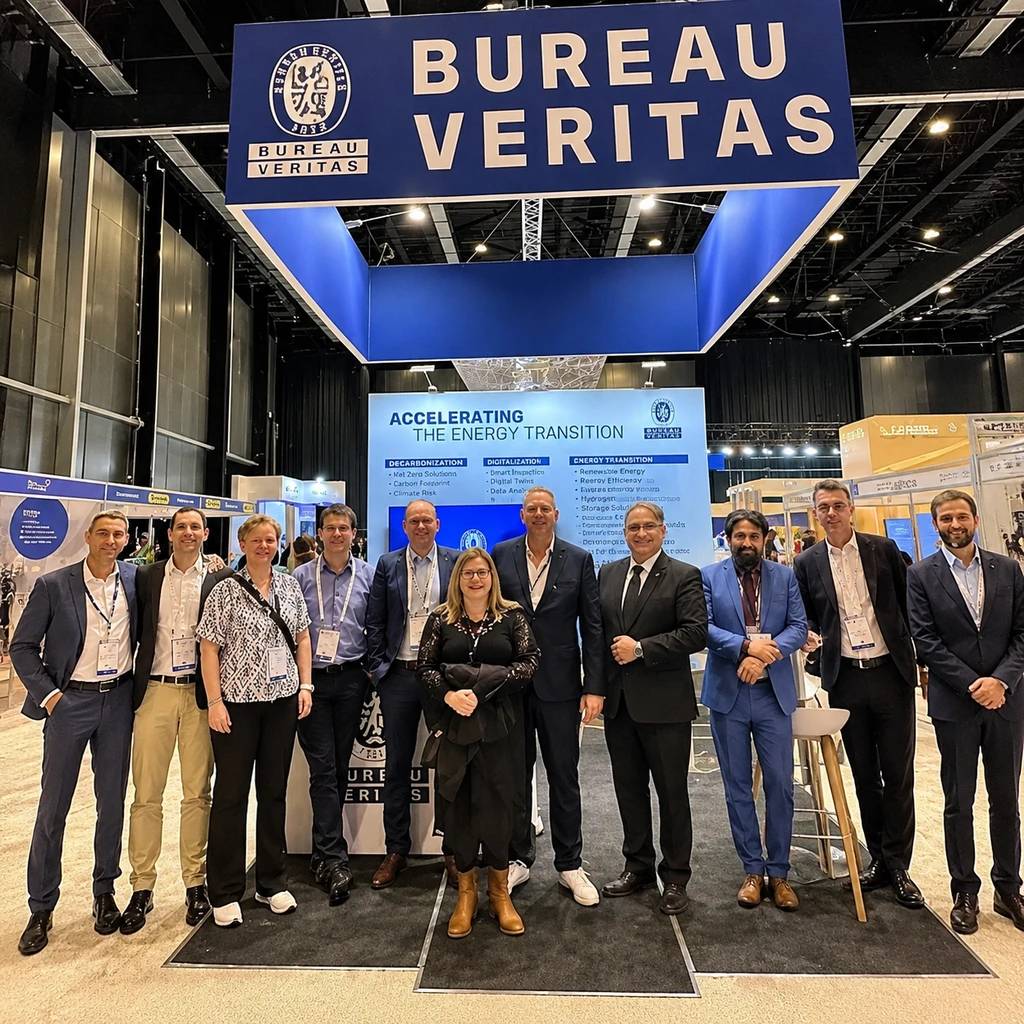
Bureau Veritas is a global company headquartered in Paris, France. It provides a wide range of inspection, quality control, and certification services. The company employs more than 66,500 people who work across its 1,400 offices and laboratories worldwide.
Bureau Veritas’ core services include the inspection and verification of the quantity, weight, and quality of various goods, as well as the testing and quality control of products and the assessment of their performance against various health, safety, and regulatory standards.
The company was founded in 1828 in Paris, France. Its main global competitors include Intertek, TÜV, SGS, and Germanischer Lloyd.
Credit Bureau
Financing Proposal and Establishment of Credit Lines for Industrial and Manufacturing Enterprises
Based on International Credit Assessment, Standby Letters of Credit (SBLC), and the Implementation of Quality, Environmental, Occupational Health & Safety, and Energy Management Systems
1. Introduction
This proposal is designed to facilitate access for companies, factories, and industrial and manufacturing enterprises to international financing facilities and credit lines, while simultaneously strengthening organizational management systems, optimizing energy consumption, reducing environmental pollutants, and supporting sustainable development.
Under this model, the applicant company will undergo an initial assessment of its financial position, sales turnover, economic capacity, and real estate collateral.
Following the initial assessment, the company will enter an independent credit assessment and audit process conducted by Bureau Veritas, within the agreed scope of services.
Upon completion of the credit assessment and verification of the relevant documentation by the financing provider, access to a credit line backed by a foreign bank’s Standby Letter of Credit (SBLC) may become available, subject to the applicable contractual terms, conditions, and obligations.
2. Objectives and Applicable International Standards
The implementation of the following four international standards will form the core of the company’s organizational and operational improvement program:
ISO 9001 – Quality Management System
– Improving production and service processes.
– Reducing waste and operational costs.
– Increasing productivity and customer satisfaction.
– Controlling and continuously improving organizational performance.
ISO 14001 – Environmental Management System
– Identifying and controlling the environmental aspects of business activities.
– Reducing industrial pollutants and waste.
– Managing the consumption of natural resources.
– Reducing the environmental impact of manufacturing operations.
ISO 45001 – Occupational Health and Safety Management System
– Identifying and controlling workplace risks.
– Reducing occupational accidents and work-related illnesses.
– Improving employee and equipment safety.
– Establishing a safe and standardized working environment.
ISO 50001 – Energy Management System
– Monitoring and measuring energy consumption.
– Identifying energy losses and inefficiencies.
– Optimizing electricity, natural gas, and fuel consumption.
– Reducing energy costs and contributing to the reduction of greenhouse gas emissions.
This program is aligned with the United Nations Sustainable Development Goals (SDGs), environmental protection, greenhouse gas emission reduction, and resource efficiency improvement.
Where applicable, measures relating to ozone layer protection and the management of ozone-depleting substances will also be incorporated into the factory’s environmental management program.
3. Credit Assessment and Credit Line Establishment Mechanism
The proposed process consists of the following stages:
1. Collection of the company’s registration, financial, tax, and economic information.
2. Review of annual sales figures and financial statements.
3. Examination of factory ownership documents and valuation of real estate collateral.
4. Conducting an audit and credit assessment by Bureau Veritas within the agreed scope of services.
5. Preparation and submission of the credit assessment report and supporting documentation to the financing provider.
6. Review of the financing structure and the proposed foreign bank SBLC.
7. Credit approval process and determination of the credit line limit.
8. Completion of the required guarantees and collateral arrangements, followed by activation of the credit facility in accordance with the executed agreement.
4. Preliminary Eligibility Requirements for Applicant Companies
Based on the proposed financing model, the initial eligibility requirements are as follows:
– Demonstrable and genuine business operations.
– Verifiable sales and financial turnover.
– Submission of financial statements, tax returns, and banking information.
– Ownership of a factory or industrial property acceptable to the financing provider.
– The appraised value of the factory property must be at least twice the requested credit facility amount.
– The value of machinery and equipment will not be included when calculating the minimum required real estate collateral value.
– The company must permit on-site inspections and operational audits.
Proposed Credit Calculation Basis:
A credit facility of up to 60% of the company’s annual sales turnover may be considered, subject to financial verification, credit assessment, collateral acceptance, and final approval by the financing provider.
5. Auditing and Periodic Monitoring
One of the key features of this proposal is the possibility of commencing the implementation of the management standards from the company’s entry into the program.
This means that the company is not necessarily required to demonstrate full compliance with all requirements of the four standards on the first day.
Instead, the company will enter a structured implementation, corrective action, and continuous improvement program. Its progress will be reviewed through quarterly surveillance audits conducted every three months.
These audits will assess:
– Progress in implementing the management standards.
– Identification and registration of nonconformities.
– Development and implementation of corrective actions.
– Availability of implementation records and objective evidence.
– Progress in energy optimization and environmental improvement programs.
– Continuous organizational progress toward conformity with the applicable standard requirements.
Continuation of access to the credit line, in addition to compliance with financial and banking conditions, will be subject to the contractual obligations governing periodic audits and monitoring.
6. Financial Conditions and Methods of Utilizing the Credit Facility
According to the preliminary proposal submitted by the financing provider, two methods of utilizing the credit facility have been presented:
Method One: Utilization of the Credit Line Without Cash Disbursement
Under this method, according to the proposal received, the applicant company allocates 20% of the agreed foreign currency amount for the provision or backing of the SBLC.
Under this arrangement:
– The objective is to establish and utilize credit capacity.
– No annual cash interest is proposed for the utilization of the credit line, according to the stated offer.
– The conditions governing currency allocation, custody or transfer arrangements, and any associated costs must be clearly specified in the formal agreement.
Method Two: Cash Disbursement and Working Capital Financing
If the applicant requests cash liquidity in Iranian Rials, the preliminary proposed financial terms are as follows:
– 20% intermediary company commission, deducted upfront from the approved credit amount.
– 23% annual financing cost, as stated in the proposed financing structure, applicable to the provision of financing and settlement in Iranian Rials.
The basis for calculating the financing cost, payment schedule, settlement procedures, and all applicable deductions must be transparently specified before the execution of any agreement.
All the above financial arrangements are subject to final bank approval, verification of official documentation, and execution of legally binding agreements.
7. Required Documentation for Preliminary Assessment
The following documents will be required for the initial evaluation:
1. Articles of Association and Certificate of Incorporation.
2. Latest company registration amendments and authorized signatory details.
3. Corporate tax returns.
4. Audited financial statements.
5. Trial balance and relevant financial records.
6. Bank account statements and transaction records.
7. Employee social security insurance records.
8. Value Added Tax (VAT) certificates and records.
9. Operating licenses and business permits.
10. Factory ownership deeds and real estate collateral docum
ents.
11. List of movable and immovable assets.
12. Annual sales figures and records of business operations.
8. Benefits of the Proposal for Industrial Enterprises
The proposed structure is intended to provide the following benefits:
– Potential access to new international financing facilities.
– Credit capacity based on the company’s verified sales turnover.
– Preservation of factory ownership and continuity of business operations.
– Access to financial resources for production development and working capital, within the limits of the approved facility.
– Improvement of management systems and organizational competitiveness.
– Reduction of costs resulting from energy inefficiencies.
– Improvement of environmental performance.
– Enhancement of corporate credibility in domestic and international business relations.
9. Implementation and Coordination of Management Systems
Asia System – Asia Knowledge and Technology Transfer Center
Asia System, leveraging its professional capabilities in management systems, auditing, training, consultancy, and organizational development, will be responsible for coordinating and implementing the management systems program.
Its responsibilities will include:
– Implementation of the applicable ISO management systems.
– Development of management system documentation.
– Employee training and awareness programs.
– Coordination of corrective and improvement actions.
– Preparation of the company for periodic audits.
– Monitoring implementation progress and supporting continuous improvement.
10. How to Start the Cooperation Process
Interested companies may submit their preliminary financial information, annual sales turnover, factory specifications, and estimated property valuation to request an initial assessment of their eligibility for the proposed credit facility.
Following the preliminary review, and subject to meeting the initial eligibility requirements, the credit assessment, auditing, documentation, and management systems implementation processes may commence.
—
Asia System – Asia Knowledge and Technology Transfer Center
Website: https://asiasystem.org/
Email: icie.asia@gmail.com
Telephone: +98 21 4422 5956
—
Legal Disclaimer
This proposal is intended solely to introduce a proposed financing structure and does not constitute an unconditional commitment to provide financing, obtain bank approval, guarantee the issuance of an SBLC, or guarantee the issuance of ISO certificates.
The identity and authority of the financing providers, the terms and conditions of the SBLC, the role of Global ACI, the Bureau Veritas audit agreement, and all financial arrangements must be independently verified and formally approved before any contractual commitment, financial obligation, or payment is made.
All financing arrangements, credit facilities, collateral requirements, and related obligations shall be governed exclusively by the final agreements executed by the authorized parties and the relevant financial institutions.
International Financial & LC Services
1. Domestic Letter of Credit (LC)
Facilitating domestic deferred LCs through listed companies in the steel and petrochemical sectors, with international settlement for Chinese beneficiaries.
3-month LC: 124% of principal
6-month LC: 148% of principal
Proposed 15% foreign currency cashback.
EUR/USD calculated at the agreed market exchange rate.
2. Global Accreditation Cooperation (Global ACI)
An international accreditation cooperation organization promoting global recognition, trade facilitation, technical competence, and transparency in certification, testing, and inspection.
Website: https://global-aci.org/
3. International Financial Settlement Models
Model 1 – Cross-Border Settlement
International payments, supplier settlements, equipment purchases, and foreign currency obligations through banking channels compliant with KYC/AML requirements.
Model 2 – Deferred Domestic LC
Domestic deferred LCs with terms of up to 12 months, helping businesses preserve working capital and manage financial obligations.
Model 3 – Spot Settlement Discount
Preferential commercial discounts of up to 20% for clients making full cash settlements.
All terms are subject to banking approval and contractual agreement.
Important Note: The provision of a credit line by us is strictly contingent upon the implementation of—or a transition toward—ISO 14001 and ISO 50001 standards (focused on reducing environmental pollutants and optimizing energy consumption).